The Benefits of Regenerative Organic Farming —And How Nootz Joined the Movement
“Regenerative organic farming is agriculture that rejuvenates the land instead of merely extracting from it.”
The Crisis in Soil Health: Why We Need Regenerative Organic Farming Now
The Problem
Soil is one of the most ubiquitous, non-renewable natural resources we possess and is considered to be “Earth’s living skin” . It plays an irreplaceable role in nourishing the health of humans and the global biosphere, providing habitats that support thousands of different species of fungi, bacteria and invertebrates. Moreover, soil acts as an extraordinary carbon sink, with its ability to store three times the amount of carbon than what is in the atmosphere and two times the amount of carbon that is in all plants and trees, thus helping to limit climate change. What’s more, this healthy ecosystem helps to drive the Earth’s carbon, nitrogen and water cycles, thereby creating the nutrients and food we need to survive. Soil produces a staggering 95 percent of humanity’s food supply, growing both the crops that we eat and the grasses and other plants that are fed to livestock.
As we are well aware, non-degraded healthy soil is a direct necessity for 95% of the food production for more than 8 billion people. Therefore, this degradation is not just an environmental issue; it directly impacts our food security. If we delve deeper into the problem, we can see that intensive farming practices have led to a phenomenon known as Crop Nutrient Decline. Studies comparing nutrient data from the mid-20th century to today show a significant decline in the concentration of essential minerals (like calcium, iron, and phosphorus) and vitamins in many common crops [3.3]. For instance, some vegetables have been reported to have declines in calcium, iron, and Vitamin C concentration of up to 15-38% over the past half-century, making it likely that the same carrots we eat today aren’t as nutritious as the carrots our grandparents ate.
Tillage breaks apart the soil structure, leading to rapid oxidation of stored soil organic carbon (SOC) into atmospheric CO2 and leaving the ground vulnerable to erosion. Monoculture (growing the same crop year after year) further depletes specific nutrients and disrupts the natural balance of the soil’s intricate biological network.
The Solution
The future of food cannot be based on an extractive model. We need a fundamental shift. This is where Regenerative Organic (RO) Farming emerges—a paradigm that moves beyond merely sustaining resources to actively restoring and enhancing the health of our planet, starting with the soil.
What is Regenerative Organic (RO) Farming? Defining the Three Pillars
The Definition
Regenerative Organic Farming is a holistic, systems-based approach that focuses on revitalising soil health to produce high-quality, nutritious food while simultaneously tackling climate change and ensuring fair working conditions. It is agriculture modelled on nature.
The most recognized standard in this space, the Regenerative Organic Certified (ROC) framework, integrates three crucial, non-negotiable pillars:
Soil Health: This is the bedrock. It involves practices that build soil organic matter, increase biodiversity, improve soil structure, and ultimately sequester carbon (removing it from the atmosphere and storing it in the soil).
Animal Welfare: This ensures livestock are raised humanely, given adequate living conditions, and have access to pasture, allowing them to express natural behaviours (where applicable).
Social Fairness: Acknowledging the human side of agriculture, this pillar mandates fair wages, safe working conditions, and equitable opportunities for farmers and workers throughout the supply chain.
Why Not Just “Organic”?
RO farming uses the existing USDA Organic (or equivalent, like EU Organic) standard as its mandatory baseline, prohibiting toxic synthetic pesticides and fertilisers. However, RO goes further by requiring positive and measurable regenerative outcomes (e.g., actively building topsoil and proving climate action), not just avoiding chemical harm.
The Toolkit for Soil Revival: Key RO Practices and the Underlying Science
Regenerative practices are designed to mimic natural ecosystems, allowing the soil’s biology to thrive and do the work that synthetic inputs previously replaced.
Planting non-cash crops (legumes, grasses) in the off-season or between rows.
Cover crops shield the soil from erosion, maintain living roots to feed soil microbes year-round, and—in the case of legumes— fix atmospheric nitrogen back into the soil, reducing the need for synthetic fertilizers.
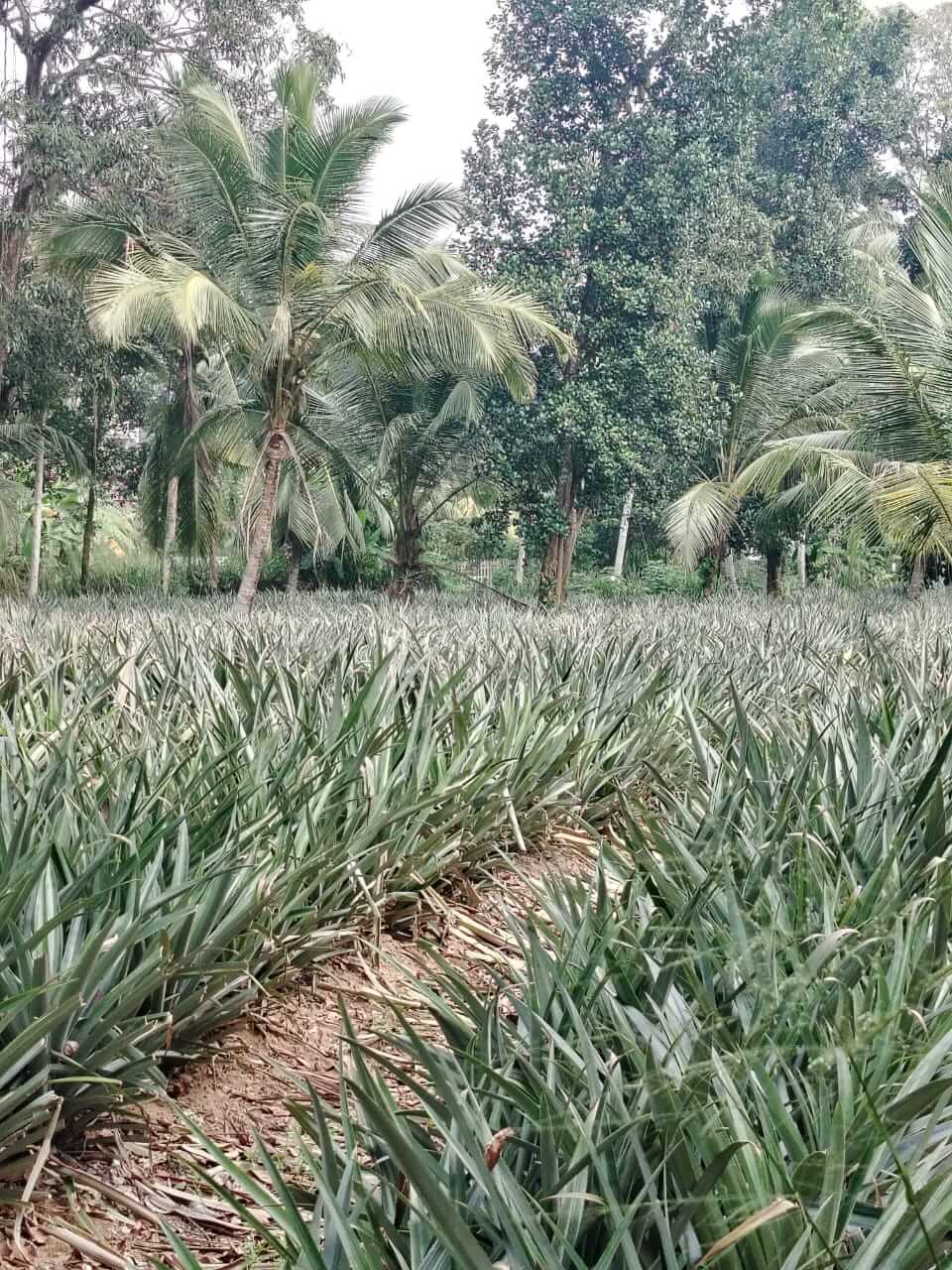
Crop rotation, intercropping, and agroforestry all work together to regenerate soil by keeping the land biologically active year-round. Crop rotation changes what’s planted each season (Growing different crops in a sequence on the same land); intercropping grows multiple crops together; agroforestry mixes trees with food crops like coconut and fruit.
Together these practices increase biodiversity, break pest and disease cycles naturally, provide a diverse food source for the soil’s microbial community, enhancing nutrient cycling and stabilising soil structure [5.3], while helping farmlands trap carbon — all confirmed by the Rodale Institute’s research on regenerative agriculture.
Integrated Grazing (Holistic Management)
Managed movement of livestock to mimic herds in nature.
Beyond Organic: The Proven Benefits of RO Farming for Climate, Water, and Food
Just imagine if all these practices were applied collectively? The benefits would be transformational, for both the planet and human health. For instance:
A key finding in regenerative agriculture is the incredible boost to water retention. Soil rich in organic matter acts like a sponge, dramatically increasing water infiltration and holding capacity, which is essential for farm resilience during droughts. Higher SOM reduces runoff and erosion, conserving precious water resources.
Enhanced Biodiversity
RO systems support the entire soil food web—from bacteria and fungi to earthworms and beneficial insects. Minimising synthetic chemicals and increasing plant diversity (via cover crops and rotation) leads to a naturally balanced ecosystem and better natural pest control.
From Sourcing to Sustainability: Nootz’s Commitment to Regenerative Principles
While achieving full Regenerative Organic Certification (ROC) is a rigorous and long-term goal, Nootz has actively embedded the core principles of RO into its Sri Lankan supply chain today, demonstrating a commitment to ethical sourcing and environmental stewardship over simple scalability. At Nootz, we source coconut and fruit from farms that use these practices because the result is better for the planet, better for farmers, and better for what ends up in your bottle: cleaner nutrition and truer flavour.
Foundation of Organic Quality
Nootz already meets the crucial organic baseline for regenerative agriculture, with our organic coconut smoothies holding both EU Organic, JAS Organic and USDA NOP certifications. This confirms our dedication to non-toxic production.
The Pillar of Social Fairness (Direct Action)
Nootz believes planetary health starts with people. We work with a diverse network of organic farmers in Sri Lanka, creating a supply chain focused on economic resilience, directly addressing the Social Fairness pillar:
Mitigating Post-Harvest Loss: Farmers in peak seasons often face significant crop waste and low prices. Nootz tackles this by actively purchasing surplus coconuts, mangoes, pineapples, papayas and passion fruit at peak harvest, which can mitigate losses of up to 30% for some fruits in the region as per UNIDO FAO estimates. “At Nootz, we turn post-harvest losses into nourishing smoothies. That’s circularity in action.” (Dulara De Alwis, CEO)
Ensuring Fair Prices: We offer fair, agreed-upon prices through “buyback LOIs” (Letters of Intent), which provide farmers with the economic stability needed to cover their costs and invest in long-term practices for their land.
Our farming and processing facilities are SMETA-audited, in line with Sedex—the world’s most widely used ethical trade audit framework. This ensures compliance with internationally recognised standards for fair wages, safe working conditions, worker welfare, and ethical labour practices.
The Pillar of Soil Health (Encouragement & Support)
We actively encourage and support our organic coconut farmers to adopt regenerative practices for their land:
Promoting Intercropping: We work with farmers to intercrop other fruits (like pineapples and mangoes) alongside their coconut palms. This is a foundational regenerative technique that diversifies the farm’s output and naturally enhances soil health by improving microbial diversity and nutrient cycling.
A Commitment to Circularity (Efficiency & Waste Reduction)
Nootz applies circular economy principles to minimize its environmental footprint, a key component of sustainable, regenerative thinking:
Coconut Water Reuse: Coconut water that was once disposed of at the factory is now collected in chiller tanks and used as a valuable base in our smoothie recipes.
Upcycling Byproducts: We repurpose coconut shells—a significant byproduct—to assist the activated carbon industry make water filters, giving a high-value second life to a waste material.
Your Plate, Your Planet: What Choosing Nootz Means for You
When you choose a Nootz organic coconut smoothie, you are not just making a health choice—you are casting a vote for a more resilient and equitable food system.
Beyond the Smoothie
Your purchase directly funds a system that is committed to regenerative principles:
Supports Farmers Directly: You help farmers in our network achieve economic stability, allowing them to focus on the long-term health of their land.
Values Circularity: You support a business that minimizes waste, proving that high-quality food production can coexist with efficient, closed-loop systems.
Quality You Can Taste: By reinforcing organic methods and encouraging practices like intercropping, you support farming that enhances soil vitality, which in turn contributes to the potential nutrient density of the ingredients.Additionally, healthy soil produces fuller, deeper, more complex flavours—something you can taste in every Nootz bottle
The Future is Regenerative: We are transparent about our ambition. Nootz is committed to the principles of Regenerative Organic farming and is actively working with our farmer network on implementing the practices that will potentially lead to full certification in the future.
Conclusion: The Future of Food is Rooted in Regeneration
The science is clear: the health of our planet, the quality of our food, and the well-being of farmers are all intrinsically linked to the health of our soil. Regenerative Organic principles offer a powerful, proven path to reversing degradation and building a more resilient food future.
Nootz’s work in Sri Lanka is a tangible example of a company prioritizing people and planet over the easy scalability of conventional farming. We are proving that businesses can, and must, be a force for good by:
Ethical Sourcing (Buyback LOIs)
Waste Reduction (Circularity)
Empowering Farmers (Promoting Intercropping)
The possibility of healing the planet through what we eat is real. Join us in supporting this vital movement. Look for brands committed to regenerative action, and enjoy your Nootz smoothie, the world’s first shelf stable coconut smoothie, while knowing that every sip supports a healthier planet, a thriving farmer, and a more sustainable future.
References
The following sources were used to provide scientific grounding and context for the arguments presented in this article:
Montgomery, D. R., & Biklé, A. (2022). Soil health and nutrient density: preliminary comparison of regenerative and conventional farming. PMC – NIH. https://pmc.ncbi.nlm.nih.gov/articles/PMC8801175/
Reider, C. A., et al. (2023). Food for Health: Considering the Nutrient Density of Food Crops. Institute for Functional Medicine. https://pubmed.ncbi.nlm.nih.gov/41178945/
Rosier, C. L., Knecht, A., Steinmetz, J. S., Weckle, A., Bloedorn, K., & Meyer, E. (2025). From Soil to Health: Advancing Regenerative Agriculture for Improved Food Quality and Nutrition Security. Frontiers in Nutrition, 12, 1638507. https://doi.org/10.3389/fnut.2025.1638507