
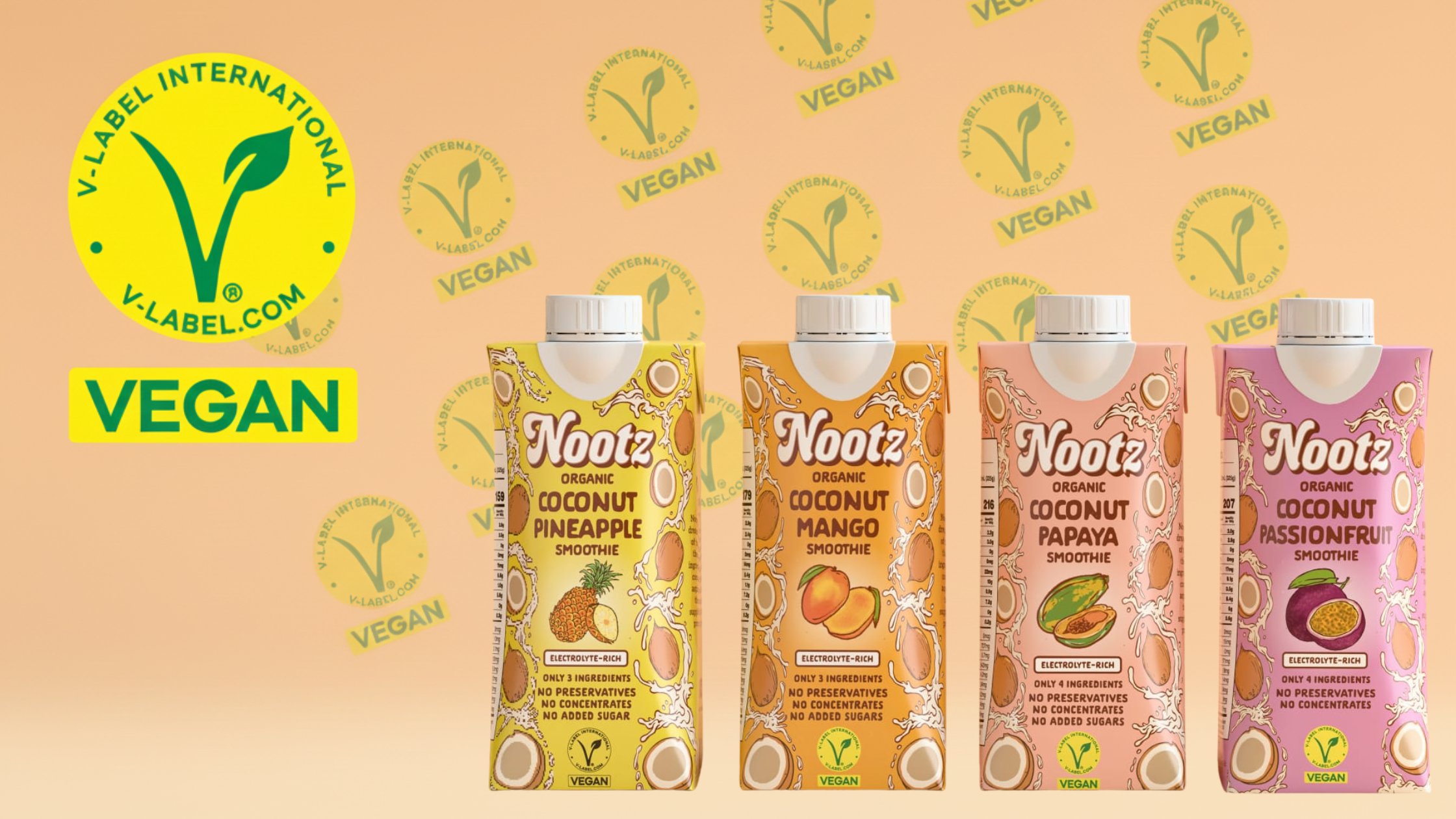
Nootz is proud to announce a major milestone in 2025. This year, our coconut smoothies have officially earned the V-Label Vegan certification – an internationally recognised standard established in Switzerland in 1996 and now present in over 50 countries. This certification recognises that Nootz meets the most rigorous global standards for “vegan” — not based on marketing claims, but on objective, audited criteria.
What Does Obtaining the V Label Signify for NOOTZ?
The V-Label is one of the world’s topmost vegan and vegetarian certification systems, recognised primarily in the European Union. To carry this seal, our Nootz smoothies had to undergo multi-stage verification including:
1. Ingredient Vetting
Every ingredient — including coconut milk, coconut water and fruit purée— was screened for:
- hidden dairy derivatives
- animal-derived processing agents
- cross-contamination risks
- ingredient origins and supply chain integrity
Critical raw ingredients underwent preliminary stage checks to verify vegan compliance at the production source.
2. Production Site Audit
Independent auditors examined:
- manufacturing lines
- hygiene protocols
- equipment segregation
- storage and handling of raw materials
This ensured zero contamination with animal-based products.
3. Process, Recipe & Documentation Review
The V-Label evaluated:
- full recipe formulations
- supplier declarations
- transport and storage practices
- internal quality assurance protocols
Only brands that pass every part of the audit receive certification.
This means that the V- Label ensures that every Nootz Smoothie range is 100% vegan, i.e., free of animal ingredients, derivatives, and animal-linked processing.
And because vegan inherently means dairy-free, every Nootz Coconut Smoothie is by extension naturally lactose-free — ideal for lactose-intolerant consumers.
The Benefits of Lactose-Free Smoothies
Lactose intolerance affects more than half the world’s population at some point in one’s life. We know that regular dairy contains lactose, a sugar that nearly 90% of Asians cannot digest properly due to low lactase enzyme activity (Gengan et al., 2025; refs 13, 19). Symptoms of lactose intolerance include bloating, gas, cramps, nausea, and skin inflammation — all triggered by the body’s inability to digest lactose. If you suffer from such gastrointestinal (GI) issues, Nootz coconut smoothies may be your gut health hero. Since our smoothies are coconut milk-based, they contain zero lactose, making them naturally suitable for lactose-intolerant individuals (Gengan et al., 2025; refs 17–18).
Choosing a lactose-free smoothie like Nootz, therefore, may support:
- lighter digestion and reduced bloating
- improved skin clarity, as dairy hormones are a major acne trigger
- fewer inflammatory responses
- steady post-meal comfort rather than heaviness
With Nootz, you get the full richness of a creamy smoothie — without the digestive consequences of dairy.
The Hero Vegan Ingredients of Nootz
Our formulations centre around Sri Lanka’s own superfoods — coconut milk, coconut water, and organically grown tropical fruits. Backed by international scientific research, both coconut milk and coconut water deliver nutritional benefits in the form of MCTs and electrolytes, respectively, that can potentially surpass dairy and most plant-based alternatives, while our fruits add naturally occurring vitamins, minerals, and antioxidants.
Coconut Milk Benefits
Coconut milk can be considered a highly functional base ingredient in plant-based nutrition — not just for its texture, but for its scientifically recognised health advantages. Research by Gengan et al. (2025) and Samarajeewa (2024) confirms that coconut milk is naturally rich in soluble and insoluble fibre, which supports smoother digestion and regularity, while also feeding beneficial gut bacteria through prebiotic oligosaccharides (refs 20–22). These prebiotics allow gut microbes to produce “postbiotic” metabolites such as short-chain fatty acids and amino acids, which contribute to immunity, reduce inflammation, and support overall gut health. Lauric acid — a key fatty acid in coconut — also demonstrates antimicrobial properties that help reduce harmful bacteria such as E. coli and Candida, offering additional support against bloating and digestive discomfort.
From an energy perspective, coconut milk offers a unique advantage: it contains MCTs (medium-chain triglycerides) that are rapidly converted into usable energy instead of being stored as fat, helping stabilise blood sugar and promote sustained focus (ref 48). In multiple in vivo studies, coconut fats have also improved lipid profiles, reduced oxidative stress, and supported liver antioxidant activity (refs 49–51). These metabolic benefits distinguish coconut milk from traditional dairy fats, which may digest more slowly and can contribute to heaviness or post-meal fatigue.
Coconut milk is also one of the richest natural sources of GABA (γ-aminobutyric acid) — a non-proteinogenic amino acid linked to mood regulation, cardiovascular support, liver and kidney function, and improved neurological calm (refs 17, 23–25). No dairy milk and very few plant milks contain GABA at comparable levels. Furthermore, research shows that coconut, almond and cashew beverages contain twice the vitamin A of cow’s milk (60+ μg/100 mL vs ~30 μg/100 mL), contributing to immunity, vision health, and skin regeneration.
Moreover, coconut milk isn’t just good for you, it’s also good for the planet, as it has a significantly lower environmental footprint than dairy. Coconut milk’s global warming potential averages 0.42 CO₂-eq/L, compared to 1.14–2.50 CO₂-eq/L for cow’s milk (Tulashie et al.). Dairy also requires nine times more land than coconut. Coconuts are usually grown with minimal fertiliser, are pesticide-free, harvested by hand (rather than heavy machinery releasing carbon emissions) and are naturally abundant in Sri Lanka, all of which contribute towards the sustainability of using them in Nootz Coconut Smoothies.
Together, these findings position coconut milk not just as a creamy plant-based substitute, but as a functional wellness ingredient — one that supports digestion, metabolic stability, skin health, daily sustained energy AND the future of our planet. This also aligns with why coconut smoothies leave you feeling light, satisfied, and energised,
Coconut Water Benefits
Coconut water is widely regarded as a functional beverage, containing a rich and balanced nutritional composition, according to Shi, Shaoran et al (2025) in their research titled ‘Research Progress in Coconut Water: A Review of Nutritional Composition, Biological Activities, and Novel Processing Technologies’. This article indicates that since coconut water contains components like carbohydrates, vital minerals (such as potassium,calcium and magnesium), B-complex vitamins, and vitamin C, phenolic acids (a type of antioxidant compound), and amino acids, they not only contribute to its hydrating properties but also enhance its potential health benefits. These benefits include restoring electrolyte balance and supporting skin radiance.
The electrolytes found in coconut water also support advanced hydration by replenishing cells, supporting muscle function, and maintaining fluid balance, which is especially ideal for tropical climates. Research in Cosmetic Dermatology (2024) also found that coconut water contains cytokinins, plant compounds linked to anti-ageing effects, improved cell repair, and skin elasticity. Highlighting its long-standing recognition as a skin-supportive beverage, health journalists in a Times of India article (2004) noted that it contributes to moisture balance, helps the skin glow, and assists in toxin elimination.
It also offers a critical layer of defence for your skin. Acting as a biological shield, coconut water’s antioxidants may neutralise damaging free radicals before they can harm your cells. This prevents ‘oxidative stress’—essentially preventing your skin cells from ‘rusting’ or ageing prematurely—ensuring the healthy, radiant glow noted by health experts since the early 2000s.
Our Nootz Smoothies, consisting of both coconut milk and water, therefore, are a potent combination of healthy fats, hydrating electrolytes, prebiotics, antioxidants, and skin-supportive compounds. According to Upali Samarajeewa (2025) in “Coconut: Its Significance in Nutrition and Health”, these properties of coconut milk and water make up a composition that dairy simply cannot match.
Our Hero Fruits- The Benefits of Papaya, Pineapple, Passion Fruit & Mango
Why Papaya?
Papaya is a nutrient-dense superfood that plays a vital role in our coconut smoothies. Here is the breakdown of why we chose it, with scientific evidence backed by Ali et al (2002) in their research titled ‘Nutritional and Medicinal Values of Papaya’:
1. The Digestion Aid: Papaya contains papain, a powerful enzyme that helps break down proteins and aids digestion. It may act as a natural “de-bloater,” making it the perfect partner for our creamy coconut base to ensure you feel light and energized after drinking.
2. Heart & Circulation Support: Rich in potassium and folate, papaya may help maintain healthy blood pressure and break down homocysteine (a marker associated with heart issues). Its high fibre content may also work to manage cholesterol levels.
3. Immune & Cellular Defense: One serving of papaya puree provides roughly 100% of your daily Vitamin C requirement. Combined with Vitamin A, E, and beta-carotene, papaya contains antioxidants that may help protect your cells from oxidation and inflammation.
4. Recovery & Healing: The nutrients in papaya may support the body’s natural healing processes. From fighting inflammation to supporting vision with high levels of carotenoids, it could aid bodily homeostasis.
Why Pineapple?
We don’t just incorporate pineapple for its tropical tang. It is also functionally unique because it may be the only major dietary source of bromelain. Researchers such as Pavan et al (2012), Hikisz (2021) and Aschner (2005) have expounded on benefits such as:
1. Enzymatic Digestion & Gut Health: Pineapple contains a complex of proteolytic enzymes collectively called Bromelain. These enzymes break down protein molecules into their building blocks (amino acids and small peptides), significantly improving protein absorption and reducing gut inflammation. This makes it an ideal pairing with our coconut base to prevent sluggishness
2. Systemic Inflammation & Recovery: Bromelain is clinically studied for its ability to modulate the immune system. It reduces the production of pro-inflammatory cytokines, which may help decrease swelling and pain in tissues. This likely makes pineapple an excellent functional ingredient for post-exercise recovery or reducing general bodily inflammation
3. Cellular Energy: Pineapple is exceptionally rich in Manganese (providing over 70% of the DV per cup). Manganese is a cofactor for the antioxidant enzyme superoxide dismutase (SOD), which is considered crucial for mitochondrial health and energy production
Why Passion Fruit?
We love the crunch and the tart kick of passion fruit, but we really love what it does for your glow. Passion fruit (Passiflora edulis) is a dense source of bioactive stilbenoids, particularly in its seeds. Science-backed articles by Matsui, Y., et al. (2010), Septembre-Malaterre, A., et al. (2016) and de Souza, M.S. (2012) indicate that passion fruit is beneficial because of:
1. Piceatannol & Skin Health: Passion fruit seeds are rich in Piceatannol, a potent polyphenol structurally similar to resveratrol. Clinical studies suggest piceatannol stimulates collagen synthesis and inhibits melanin accumulation, promoting skin elasticity and hydration while protecting against photo-aging (sun damage)
2. High-Impact Antioxidant Activity: The pulp is loaded with Vitamin C and cryptoxanthin (a provitamin A carotenoid). These compounds scavenge free radicals, protecting cells from oxidative stress. This antioxidant profile supports cardiovascular health by preventing lipid peroxidation.
3. Glycemic Control & Fibre: The seeds offer a high amount of insoluble fibre. This fibre slows the absorption of sugar into the bloodstream, preventing insulin spikes and providing a steady release of energy rather than a sugar crash.
Why Mango?
The “King of Fruits” brings more than just creamy sweetness. Mangoes are a delivery system for lipophilic (fat-soluble) vitamins and unique xanthones. Research by Masibo, M., & He, Q. (2008), Ribaya-Mercado, J. D. (2002) and Sanmugapriya, E., & Venkataraman, S. (2006) indicates the following benefits:
1. The Mangiferin Advantage: Mango contains a unique bioactive compound called Mangiferin. Research indicates mangiferin acts as a “super antioxidant” with anti-inflammatory, anti-diabetic, and immunomodulatory effects. It may help regulate lipid profiles and protect the heart from oxidative damage.
2. Bioavailability Synergy: Mango is rich in fat-soluble beta-carotene (Vitamin A precursor). By blending mango with the healthy medium-chain triglycerides (MCTs) in our coconut base, we are likely to significantly increase the absorption rate of these vitamins compared to eating mango alone.
3. Vision & Mucosal Health: The high levels of provitamin A carotenoids are essential for maintaining the integrity of mucosal linings (your first line of defense against pathogens) and protecting the retina from oxidative stress caused by blue light exposure.
At Nootz, since we blend all these fruits with coconut, our smoothies have a distinctive scientific advantage- Vitamins A, E, and K (found in Papaya, Mango, and Passion Fruit) are fat-soluble, meaning the body may not be able to absorb them well without dietary fat (Andrès et al, 2024). Our coconut base provides that healthy fat, making the fruit nutrients more effective in a Nootz smoothie than they would be in a water-based juice. Moreover, having coconut milk and water paired with fruit puree rich in natural fructose, Nootz smoothies are likely to offer a slow-release energy curve ideal for work, study, training, or long days on the move.
Does all of this seem too good to be true? We understand that there might be sceptics who have believed certain myths about coconut smoothies. Let’s debunk them for you.
Coconut Smoothie Myths Debunked
Myth 1: Dairy is needed for creaminess
One of the most persistent myths, especially in traditional Western cooking, is the idea that rich, decadent creaminess can only be achieved through the use of dairy products like heavy cream, butter, or milk. This belief often deters people from exploring plant-based alternatives, as they fear sacrificing the luxurious texture they are accustomed to, from dairy.
However, this notion is simply not true. Creaminess is a textural quality resulting from fat and/or emulsified solids suspended in a liquid base, and it can be achieved through a multitude of non-dairy sources. Anyone who has sampled well-prepared dishes using ingredients like coconut milk will immediately acknowledge its incredible richness and full-bodied texture. Full-fat coconut milk, in particular, offers a velvety mouth feel that rivals—and sometimes surpasses—heavy dairy cream, making it a staple in many Southeast Asian, Indian, and Caribbean cuisines.The key is simply understanding the role of fat and emulsification, not relying exclusively on an animal-derived product.
Myth 2: Fruit sugar is “bad”
Whole fruit comes with fructose → slow release → steady blood sugar.
Not all sugar is the same. The fructose in whole fruit is often misunderstood. Unlike simple sugars in processed foods, the fructose in whole fruit slows absorption into the bloodstream, resulting in a slow, steady energy release and stable blood sugar levels. Due to their high water and fibre content, whole fruits are very satiating, making it difficult to overconsume calories compared to fibre-stripped fruit juices or sodas. Therefore, for most people, the fructose in whole fruit is safe and part of a nutrient-dense food.
Myth 3: Vegan food is bland
The notion that vegan diets are ‘ bland’ is a common misconception. When done right, these foods can be a flavourful addition to your daily diet. Our brand, Nootz, is a prime example. We go beyond simply blending and packaging coconut milk. We incorporate exotic fruits such as mango, pineapple, passion fruit, and papaya into our smoothies. This approach delivers a product that doesn’t just satisfy your thirst but thrills your palate.
Conclusion: Why This Certification — And This Smoothie — Matters
Choosing a V-Label-certified Nootz smoothie is a commitment to verified vegan nutrition and a cleaner, dairy-free plant-based lifestyle. Our certification confirms the purity of our ingredients, but the true magic lies in the synergy of our blend. Modern research now confirms what Sri Lankan generations have always known: the coconut is a complete nourishment system. By combining the sustaining fuel of coconut milk and the electrolyte hydration of coconut water with our tropical fruits, we create a beverage that heals as much as it hydrates. Experience our plant-powered beverages for yourself—visit our online retailers or your local wellness shop to taste the difference. If you would like to become a distributor or partner up with us, we are only one call or email away.
Scientific References:
- Gengan, G., Mohd Zaini, N. S., Saari, N., et al. (2025). Nutritional and therapeutic benefits of coconut milk and its potential as a plant-based functional yogurt alternative: a review. Food Science and Human Wellness, 14(1): 9250004.
- Shi, S., Wang, W., Wang, F., Yang, P., Yang, H., He, X., & Liao, X. (2025). Research Progress in Coconut Water: A Review of Nutritional Composition, Biological Activities, and Novel Processing Technologies. Foods, 14(9): 1503.
- Samarajeewa, U. (2024/2025). Coconut: Its Significance in Nutrition and Health. (Chapter referenced for MCT metabolism, HDL benefits, and metabolic response insights.)
- Tulashie, S. K., Amenakpor, J., Atisey, S., Odai, R., & Akpari, E. E. A. Production of coconut milk: A sustainable alternative plant-based milk. Case Studies in Chemical and Environmental Engineering.
- Ali, M., et al. (2002). Nutritional and Medicinal Values of Papaya.
- Pavan, R., Jain, S., Shraddha & Kumar, A. (2012). Properties and Therapeutic Application of Bromelain: A Review.
- Hikisz, P. (2021). Bromelain—A Natural Anti-Inflammatory Agent.
- Aschner, M. (2005). Manganese and its role in cellular energy metabolism.
- Matsui, Y., et al. (2010). Piceatannol and its effects on skin and collagen synthesis.